

Read 1 of 5
Beyond uniform pricing
What does uniform pricing leave on the table, and what does it take to collect it?
Last week Ride On charged every kid $2 a ride. We call this uniform pricing: the price is uniform across all individuals. Some of those kids would have paid $3. Others valued a ride at $1, more than the 50 cents it costs, but didn't ride at all.
This week we drop uniform pricing. A firm with market power can reach the surplus that a uniform price leaves on the table in two ways. It can price discriminate, charging different customers, or different units, different prices. Or it can use other pricing schemes, such as a two-part tariff, that extract more from customers without discriminating. We'll study price discrimination first and then turn to the other schemes. Either way, the firm earns more, but customers may end up better off or worse off, depending on the method used.
This first reading asks what uniform pricing leaves on the table, what a firm needs before it can charge more than one price, and how to tell the main pricing schemes apart.
1.1
What uniform pricing leaves on the table
Recall Ride On's monopoly outcome. Demand is \(Q^d(p)=140-40p\), marginal cost is 50 cents, and Ride On sells 60 rides at $2. In Week 4 we split the surplus into three pieces.
| Area | Value | |
|---|---|---|
| Consumer surplus | Below demand, above $2, up to 60 rides | 45 |
| Producer surplus | Above \(MC\), below $2, up to 60 rides | 90 |
| Deadweight loss | Below demand, above \(MC\), from 60 to 120 rides | 45 |
Ride On would like a piece of the other two. The consumer-surplus triangle belongs to kids who'd pay more than $2. If Ride On could charge them more without affecting others, it would. The deadweight-loss triangle belongs to kids who'd pay something between 50 cents and $2.
Take the 90th kid in line from Week 4. They value a ride at \(p(90)=1.25\), and the ride costs 50 cents to run. At a price of $1, both sides would gain. But to sell that ride, Ride On would have to charge every kid $1, and the discount on the first 60 rides would cost more than the ride brings in. If it could charge the 90th kid $1 and leave everyone else at $2, it would.
These are sometimes called the triangles of opportunity. A uniform price can't reach either of them, because any price change applies to everyone. That's exactly why marginal revenue lay below price in Week 4.
Charging different prices for the same good, when the difference isn't explained by a difference in cost, is called . A delivery firm that charges $5 more to reach a remote town because it costs $5 more isn't discriminating. One that charges $5 more because people there have no alternative is. In economics the word "discrimination" is descriptive. It means the firm treats buyers differently. Whether that is good or bad for buyers is a separate question, and Reading 5 takes it up.
1.2
What a firm needs before it can discriminate
A firm has to meet three conditions before it can price discriminate.
Market power. A price-taker sells at the market price or not at all. A firm that tried to charge some buyers more would simply lose them to a rival. So discrimination is only possible for a firm that sets its own price, as in Week 4.
A way to separate buyers. The firm has to charge different prices to different buyers, which means it needs some way of telling them apart. Sometimes it can see a label that is correlated with willingness to pay: an age, an address, a booking channel. Sometimes it can't, and it has to design options so that buyers separate themselves. We'll discuss both.
No arbitrage. means buying where the price is low and selling where it is high. If a low-price buyer can resell to a high-price buyer, the high price disappears. The same happens if a high-value buyer can simply join the low-price group. So the scheme needs a fence.
Fences come from several places. Services are hard to resell: you can't resell a haircut or a hotel night booked in your own name. Transport costs and import rules make it costly to move books or medicines from a cheap country to an expensive one. Contracts can forbid resale, as with software sold to universities at a discount. And firms can change the product a little, as with a student edition that lacks features a business user needs.
When a fence fails, the scheme fails with it. A cinema can offer a student price because it checks student cards at the door. An online shop that offered a student discount to anyone who clicked a box would soon find that all its customers were students.
1.3
Classify by what the firm knows
Pricing schemes are traditionally sorted into three "degrees", a classification due to Arthur C. Pigou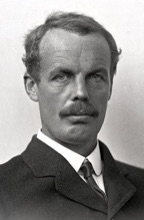 Arthur Cecil Pigou (1877–1959) was an English economist at Cambridge. His work spans welfare economics, business cycles, unemployment, public finance and the measurement of national income. He is best known for the Pigouvian tax, a tax on activities that harm others.. The numbering isn't very helpful, so we'll also give each degree a plain name that says what it does. All three names answer one question: what does the firm know about each customer at the moment it sets the price?
| Degree | What the firm knows | Examples |
|---|---|---|
| Personalized pricing | Each individual's economic value | A negotiated price for a custom machine; a car dealer who sizes up each buyer; the pricing strategy of Wish.com |
| Menu pricing | Nothing about the individual, so it makes customers reveal themselves | A menu that customers choose from: fare classes, a Lite version, bulk discounts, coupons, early-bird prices |
| Group pricing | Characteristics of the individual, but not their economic value | Student and senior tickets; prices that differ by country; phone and internet bookings |
In first degree, the firm infers each customer's willingness to pay and charges each customer exactly that. In second degree, the firm knows nothing about the individual, so it can't assign prices at all. It offers a menu instead and lets customers choose. Their choices reveal something about them, and that self-selection is what we call screening. In third degree, the firm knows which group a customer belongs to, so it sets one price for each group.
Firms use many tools to build these schemes. The table lists the most common ones, though it isn't complete.
| Tool | How it works | Example |
|---|---|---|
| Quantity | The price per unit falls for larger purchases | Bulk packs; a lower price for every ride after the sixth |
| Quality | Different qualities sell at different prices | Economy and business class |
| Time | The price depends on when you buy | Early-bird tickets; a new phone that gets cheaper a year later |
| Coupons | Only buyers who make the effort get the discount | Discount codes |
| Versioning | A deliberately limited version sells for less | A Lite edition of software; streaming with ads |
| Mixed bundling | Products sell separately and also as a cheaper package | A burger, fries and a drink as a meal deal |
| Pure bundling | Products sell only as a package | A streaming service that sells its sports and movie channels only together |
Some pricing schemes let a firm extract more from its customers without charging them different prices for the same good. Under pure bundling, the firm sells its products only as a package. Under a two-part tariff, every customer pays the same fixed fee plus the same per-unit fee. Neither has to be price discrimination, but both reach into the triangles of opportunity.
We'll work through all of this in the next readings: personalized pricing and the two-part tariff in Reading 2, menu pricing, with its tools and pure bundling, in Reading 3, and group pricing in Reading 4.
Classify by what the firm observes
A cinema charges $12 for anyone over 65 and $18 for everyone else. Which kind of pricing is this?
The cinema checks age at the door. It doesn't know any individual's value, but it knows which group each customer is in. That's third degree. The fence is the ID check. Without it, everyone would claim to be over 65.
The same cinema charges $12 on Tuesdays and $18 on Saturdays for the same film. Which kind is this now?
Nobody has to go on a Tuesday. Customers choose the night, and those who care most about seeing the film on a weekend pay more. The firm observes nothing about them. It offers a menu of nights and prices, and customers sort themselves. That's screening.
Summary