


Week 05 · Complete notes
Pricing
Can a firm charge different prices to different customers?
This print edition combines all five readings. Interactive definitions become ordinary text when printed.
01
Beyond uniform pricing
What does uniform pricing leave on the table, and what does it take to collect it?
Last week Ride On charged every kid $2 a ride. We call this uniform pricing: the price is uniform across all individuals. Some of those kids would have paid $3. Others valued a ride at $1, more than the 50 cents it costs, but didn't ride at all.
This week we drop uniform pricing. A firm with market power can reach the surplus that a uniform price leaves on the table in two ways. It can price discriminate, charging different customers, or different units, different prices. Or it can use other pricing schemes, such as a two-part tariff, that extract more from customers without discriminating. We'll study price discrimination first and then turn to the other schemes. Either way, the firm earns more, but customers may end up better off or worse off, depending on the method used.
This first reading asks what uniform pricing leaves on the table, what a firm needs before it can charge more than one price, and how to tell the main pricing schemes apart.
1.1
What uniform pricing leaves on the table
Recall Ride On's monopoly outcome. Demand is \(Q^d(p)=140-40p\), marginal cost is 50 cents, and Ride On sells 60 rides at $2. In Week 4 we split the surplus into three pieces.
| Area | Value | |
|---|---|---|
| Consumer surplus | Below demand, above $2, up to 60 rides | 45 |
| Producer surplus | Above \(MC\), below $2, up to 60 rides | 90 |
| Deadweight loss | Below demand, above \(MC\), from 60 to 120 rides | 45 |
Ride On would like a piece of the other two. The consumer-surplus triangle belongs to kids who'd pay more than $2. If Ride On could charge them more without affecting others, it would. The deadweight-loss triangle belongs to kids who'd pay something between 50 cents and $2.
Take the 90th kid in line from Week 4. They value a ride at \(p(90)=1.25\), and the ride costs 50 cents to run. At a price of $1, both sides would gain. But to sell that ride, Ride On would have to charge every kid $1, and the discount on the first 60 rides would cost more than the ride brings in. If it could charge the 90th kid $1 and leave everyone else at $2, it would.
These are sometimes called the triangles of opportunity. A uniform price can't reach either of them, because any price change applies to everyone. That's exactly why marginal revenue lay below price in Week 4.
Charging different prices for the same good, when the difference isn't explained by a difference in cost, is called . A delivery firm that charges $5 more to reach a remote town because it costs $5 more isn't discriminating. One that charges $5 more because people there have no alternative is. In economics the word "discrimination" is descriptive. It means the firm treats buyers differently. Whether that is good or bad for buyers is a separate question, and Reading 5 takes it up.
1.2
What a firm needs before it can discriminate
A firm has to meet three conditions before it can price discriminate.
Market power. A price-taker sells at the market price or not at all. A firm that tried to charge some buyers more would simply lose them to a rival. So discrimination is only possible for a firm that sets its own price, as in Week 4.
A way to separate buyers. The firm has to charge different prices to different buyers, which means it needs some way of telling them apart. Sometimes it can see a label that is correlated with willingness to pay: an age, an address, a booking channel. Sometimes it can't, and it has to design options so that buyers separate themselves. We'll discuss both.
No arbitrage. means buying where the price is low and selling where it is high. If a low-price buyer can resell to a high-price buyer, the high price disappears. The same happens if a high-value buyer can simply join the low-price group. So the scheme needs a fence.
Fences come from several places. Services are hard to resell: you can't resell a haircut or a hotel night booked in your own name. Transport costs and import rules make it costly to move books or medicines from a cheap country to an expensive one. Contracts can forbid resale, as with software sold to universities at a discount. And firms can change the product a little, as with a student edition that lacks features a business user needs.
When a fence fails, the scheme fails with it. A cinema can offer a student price because it checks student cards at the door. An online shop that offered a student discount to anyone who clicked a box would soon find that all its customers were students.
1.3
Classify by what the firm knows
Pricing schemes are traditionally sorted into three "degrees", a classification due to Arthur C. Pigou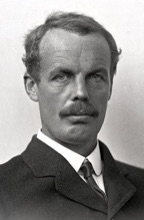 Arthur Cecil Pigou (1877–1959) was an English economist at Cambridge. His work spans welfare economics, business cycles, unemployment, public finance and the measurement of national income. He is best known for the Pigouvian tax, a tax on activities that harm others.. The numbering isn't very helpful, so we'll also give each degree a plain name that says what it does. All three names answer one question: what does the firm know about each customer at the moment it sets the price?
| Degree | What the firm knows | Examples |
|---|---|---|
| Personalized pricing | Each individual's economic value | A negotiated price for a custom machine; a car dealer who sizes up each buyer; the pricing strategy of Wish.com |
| Menu pricing | Nothing about the individual, so it makes customers reveal themselves | A menu that customers choose from: fare classes, a Lite version, bulk discounts, coupons, early-bird prices |
| Group pricing | Characteristics of the individual, but not their economic value | Student and senior tickets; prices that differ by country; phone and internet bookings |
In first degree, the firm infers each customer's willingness to pay and charges each customer exactly that. In second degree, the firm knows nothing about the individual, so it can't assign prices at all. It offers a menu instead and lets customers choose. Their choices reveal something about them, and that self-selection is what we call screening. In third degree, the firm knows which group a customer belongs to, so it sets one price for each group.
Firms use many tools to build these schemes. The table lists the most common ones, though it isn't complete.
| Tool | How it works | Example |
|---|---|---|
| Quantity | The price per unit falls for larger purchases | Bulk packs; a lower price for every ride after the sixth |
| Quality | Different qualities sell at different prices | Economy and business class |
| Time | The price depends on when you buy | Early-bird tickets; a new phone that gets cheaper a year later |
| Coupons | Only buyers who make the effort get the discount | Discount codes |
| Versioning | A deliberately limited version sells for less | A Lite edition of software; streaming with ads |
| Mixed bundling | Products sell separately and also as a cheaper package | A burger, fries and a drink as a meal deal |
| Pure bundling | Products sell only as a package | A streaming service that sells its sports and movie channels only together |
Some pricing schemes let a firm extract more from its customers without charging them different prices for the same good. Under pure bundling, the firm sells its products only as a package. Under a two-part tariff, every customer pays the same fixed fee plus the same per-unit fee. Neither has to be price discrimination, but both reach into the triangles of opportunity.
We'll work through all of this in the next readings: personalized pricing and the two-part tariff in Reading 2, menu pricing, with its tools and pure bundling, in Reading 3, and group pricing in Reading 4.
Classify by what the firm observes
A cinema charges $12 for anyone over 65 and $18 for everyone else. Which kind of pricing is this?
The cinema checks age at the door. It doesn't know any individual's value, but it knows which group each customer is in. That's third degree. The fence is the ID check. Without it, everyone would claim to be over 65.
The same cinema charges $12 on Tuesdays and $18 on Saturdays for the same film. Which kind is this now?
Nobody has to go on a Tuesday. Customers choose the night, and those who care most about seeing the film on a weekend pay more. The firm observes nothing about them. It offers a menu of nights and prices, and customers sort themselves. That's screening.
Summary. Uniform pricing leaves consumer surplus with buyers who'd pay more and loses trades with buyers who'd pay less but more than marginal cost. Firms design pricing schemes to exploit the differences in customers' willingness to pay. Price discrimination requires market power, a way to separate buyers and a fence against arbitrage. Classify a scheme by what the firm knows: each customer's value (first degree), nothing, so customers choose from a menu (second degree, or screening), or customer characteristics (third degree).
02
Personalized pricing
What can a firm do if it knows each customer's value, and how close can it get with one price list for everyone?
Start with the extreme case. Suppose Ride On knew exactly what every ride is worth to every kid. What would it charge, and how much would it earn?
The answer is a useful benchmark, even though almost no firm has that information. Then we'll see a surprise. If Ride On's customers are alike, a simple day pass gets Ride On all the way to the benchmark, with the same fees for every kid.
2.1
Ride On as ten kids
To talk about individual customers, we need individual demand. Suppose Ride On's customers are ten identical kids, and each kid's daily demand for rides is
Ten such kids give market demand \(Q^d(p)=10\times(14-4p)=140-40p\), the same as in Week 4. So every Week 4 number still holds: at $2, each kid takes 6 rides, the market takes 60, and Ride On earns $50 a day. Cost is still \(C(Q)=40+0.5Q\).
A kid's inverse demand is \(p(q)=3.5-q/4\). It reads the same way as in Week 4. A kid values their first ride at $3.25, their fourth at $2.50 and their twelfth at 50 cents. Each extra ride is worth a little less than the one before.
2.2
Personalized pricing
Now suppose Ride On could charge each kid, for each ride, exactly what that ride is worth to them. This is , or first-degree price discrimination.
How many rides should Ride On sell? Selling one more ride no longer lowers the price of any other ride, because every ride has its own price. So the extra ride adds its own value to revenue, and marginal revenue equals the demand price. Ride On keeps selling as long as a ride is worth at least the 50 cents it costs. A kid's twelfth ride is worth \(p(12)=3.5-3=0.5\), exactly the cost, and every later ride is worth less. So each kid rides 12 times and the market takes 120 rides, the efficient quantity from Week 4.
Ride On's revenue is the whole area under demand up to 120 rides. Its profit is the area between demand and marginal cost, less the rental:
Under uniform pricing, Ride On earned $50. Now it earns $140. Consumer surplus is zero, because every kid pays their full value for every ride. Deadweight loss is also zero, because every ride worth more than its cost takes place. The two triangles from Reading 1 both go to Ride On.
That second point is easy to miss. Personalized pricing is efficient. Total surplus is $180, the most these rides can create. The firm takes all of it. That's bad for kids, but as in Week 4, who gets the surplus is a different question from how much surplus there is.
2.3
Why it is rare
Personalized pricing needs the firm to know every customer's value for every unit. That's a lot of information. Customers have every reason to hide it, because revealing a high value only raises the price they pay.
It comes closest when each sale is negotiated. A firm selling a few custom machines, such as subsea robots to offshore drilling companies, talks to each buyer, learns about their project, and quotes a price for each. A car dealer who sizes up each buyer and haggles is trying to do the same thing.
Online sellers can now estimate individual values from browsing and purchase histories. They still face the other two conditions. Customers compare prices, share them and sometimes resent them, and regulators are watching. The online marketplace Wish set prices based on each consumer's purchase behavior and location, among other things, and according to the Netherlands Authority for Consumers and Markets (ACM), it didn't disclose this clearly enough. After the ACM stepped in, Wish blocked personalized pricing in the EU from May 25, 2022, and banned its merchants from advertising fake discounts (European Parliament study). Businesses there can use personalized prices only under strict transparency conditions. They have to say clearly, before the purchase, that prices are personalized, and customers have to understand how their personal information affects the price.
Personalized pricing is one form of dynamic pricing, which tries to capture willingness to pay as it changes with circumstances. In 1999, Coca-Cola's CEO Douglas Ivester confirmed that the company was testing vending machines that would raise the price of a soda on hotter days. Consumers and competitors, Pepsi among them, called it price gouging. The outrage forced Coca-Cola to back down and drop the plan.
| Dynamic pricing | What moves the price | Examples |
|---|---|---|
| Surge or yield management | A local spike in demand against a fixed, perishable supply | Uber and Lyft, airlines, hotels |
| Contextual or behavioral | Signals of urgency: device type, browsing history, even battery level | Travel booking sites, delivery apps |
| Surveillance or personalized | A full customer profile: purchase history, how often they buy, their expected lifetime value | Direct-to-consumer online retail, premium loyalty programs |
Only the last row prices the individual, and that's where Wish sat. The Coca-Cola machine is closest to the first row: it would have charged everyone at the machine the same price on a given day. Reading 5 comes back to fairness and regulation.
2.4
A two-part tariff
Here is a scheme that charges every kid the same. Ride On sells a day pass. A kid who buys the pass can then ride for a per-unit fee of \(p\) per ride. A kid who doesn't buy the pass can't ride. This is a : a fixed fee for access and a per-unit fee for each unit used.
A two-part tariff isn't price discrimination. Every kid pays the same fixed fee and the same per-unit fee. Yet, as we'll see, it can end up exactly where personalized pricing does, with all of the consumer surplus going to the firm as profit.
Take the per-unit fee as given for now. A kid with a pass rides until the next ride is worth less than \(p\), so they take \(q=14-4p\) rides. Before paying for the pass, their surplus from those rides is the triangle below their demand and above \(p\). That's the most they'll pay for the pass. So Ride On sets the fixed fee \(F\) equal to that triangle, and the kid's consumer surplus, after paying \(F\), is zero.
A per-unit fee of $2. Each kid rides 6 times.
That already beats the $50 from uniform pricing. But it isn't the best Ride On can do.
A per-unit fee equal to marginal cost. Each kid rides 12 times. Ride On makes nothing on the rides, but the fixed fee is much larger:
That's the profit from personalized pricing, and Ride On gets there charging every kid the same fees. Don't read too much into this. To set \(F\), Ride On has to know a kid's demand curve. Since the kids are identical, knowing that curve means knowing what every ride is worth to every kid, so there's nothing left to hide. The two-part tariff does as well as personalized pricing because the kids are alike. Reading 3 starts from what happens when they aren't.
Why is 50 cents the best per-unit fee? Go back to the $2 fee and cut it to $1. Each kid's margin on rides falls from \((2-0.5)\times6=9\) to \((1-0.5)\times10=5\), a loss of $4. But the fixed fee rises from $4.50 to $12.50, a gain of $8. So Ride On is $4 ahead on each kid.
Compare this with Week 4. There, a lower price meant a discount on every ride Ride On would have sold anyway, and that discount was lost. Here the discount comes back. A kid who pays less per ride has more surplus, and the fixed fee collects it. What's left is the value of the new rides. Rides 7 to 10 are worth \(\tfrac12\times4\times(1.5+0.5)=4\) more than they cost, which is exactly the $4. So a lower per-unit fee raises profit as long as it adds rides worth more than they cost, and that stops at marginal cost.
Two-part tariffs are very common.
- Amusement parks. You pay for an entry ticket, then pay per ride or per game inside.
- Gyms. You pay a monthly or annual membership, plus a fee for each personal training session or class. A basic plan with a flat fee and nothing per visit is the special case where the per-unit fee is zero.
- Warehouse clubs. You pay an annual membership to shop at Costco, plus the price of each item at the register.
- Utilities. Electricity, water and gas bills have a fixed supply charge, paid however much you use, and a per-unit fee for each kWh or kiloliter.
A two-part tariff needs a fence too. If one kid buys the pass and shares it with nine friends, Ride On collects one fixed fee instead of ten. That's why a day pass is usually a wristband, and why Costco checks membership cards at the door.
Here is a real electricity bill. For the 49 days from 12 March to 29 April, the supply charge is $1.2386 a day, or $60.69. The customer pays it every day, even while away on holiday. That's the fixed fee. Peak consumption costs $0.4513 per kWh, about 45 cents. That's the per-unit fee. The rates changed on 30 April, so the bill lists each charge twice.
 Per-unit fee. 174.851 kWh × $0.451264 per kWh = $78.90. The more you use, the more you pay.Fixed fee. 49 days × $1.2386 a day = $60.69. It depends on the days in the period, not on how much you use.
Check the two-part tariff
Ride On sets the per-unit fee at $1. What is the largest fixed fee each kid will pay, and what is daily profit?
At $1 each kid rides \(14-4=10\) times. The fixed fee is \(\tfrac12\times10\times(3.5-1)=12.50\). The margin on rides is \((1-0.5)\times10=5\). Profit is \(10\times17.50-40=135\). That's $5 less than at a per-unit fee of 50 cents, and the $5 is the deadweight loss from the two rides each kid no longer takes.
Summary. Personalized pricing charges each buyer the value of each unit. The firm sells the efficient quantity and keeps the whole surplus: Ride On earns $140, with zero consumer surplus and zero deadweight loss. A two-part tariff charges every buyer the same fixed fee and per-unit fee, so it isn't price discrimination. With identical buyers, it gets the same result: set the per-unit fee at marginal cost and the fixed fee at each buyer's surplus. A lower per-unit fee doesn't lose money on existing units, because the fixed fee collects the discount back.
03
Pricing by menu
How can a firm charge different customers different prices when it can't tell them apart?
In Reading 2 the kids were all alike, so one pass collected everything. Suppose they aren't. Some kids come to the mall only rarely, and we'll call them occasional riders. Others come every weekend, and we'll call them regulars. With a per-unit fee of 50 cents, the surplus of an occasional rider is $18 and that of a regular is $32. A fixed fee of $18 sells passes to everyone, but the regulars keep $14 each. A fixed fee of $32 takes everything from the regulars, but the occasional riders stay home. If Ride On could tell them apart, it would charge each their own fee. It can't.
Airlines have the same problem. They can't see who is flying for business. A business traveler and a tourist look the same on the booking page. Yet airlines manage to charge them very different prices.
They do it by offering a menu and letting travelers choose. This reading builds the menu carefully, shows why it has to leave the high-value customers some surplus, and shows when a menu isn't worth offering at all. Then it comes back to Ride On's kids.
3.1
The Flying Koala
The Flying Koala flies between Melbourne and Sydney. It carries 10,000 passengers a day: 3,000 business travelers and 7,000 tourists. It sells two kinds of ticket. A restricted ticket can't be changed or refunded. An unrestricted ticket can. The unrestricted ticket costs more to provide, because the airline has to hold seats open for passengers who change plans.
| Restricted | Unrestricted | |
|---|---|---|
| Tourist WTP | $140 | $175 |
| Business WTP | $225 | $300 |
| Cost to the airline | $100 | $150 |
Business travelers value both tickets more, and they value flexibility a lot more: $75 against the tourists' $35.
3.2
If the airline could tell them apart
Suppose the airline could see each passenger's type. It could send tourists and business travelers to different ticket counters and charge each counter its own prices. Then it would sell each type the ticket with the larger margin, at that type's full WTP. For a tourist, a restricted ticket at $140 earns $40 and an unrestricted one at $175 earns $25, so tourists get restricted tickets. For a business traveler, restricted at $225 earns $125 and unrestricted at $300 earns $150, so business travelers get unrestricted tickets. So the profit under full information, \(\pi^f\), is
That's group pricing (third degree), which we'll study in Reading 4. The separate counters tell the airline exactly who is a tourist and who is a business traveler. In practice it can't tell them apart: both look the same on the booking page.
3.3
The same fares at one counter
Now the airline can't identify tourists and business travelers, so there's only one ticket counter instead of two. It posts both fares there, and every passenger can buy either ticket. Try the same fares as before, $140 restricted and $300 unrestricted. These are the full-information prices: each type pays its full WTP for the ticket meant for it, so the airline hopes to earn \(\pi^f\) again.
Every passenger compares the two tickets and buys the one that leaves the larger surplus. A tourist gets \(140-140=0\) from restricted. Unrestricted would leave her \(175-300\lt0\), because the $300 fare is more than her WTP of $175. So tourists buy restricted, as planned. A business traveler gets a surplus of \(225-140=85\) from restricted and \(300-300=0\) from unrestricted. Because restricted leaves her more surplus than unrestricted, she buys restricted too. Every passenger buys a $140 ticket, and the airline earns \(10{,}000\times40=400{,}000\).
With a single counter, the cheap option meant for tourists is also available to business travelers. To make business travelers pick the expensive option, the airline has to make it at least as attractive to them as the cheap one.
3.4
Designing the menu
A is a menu designed so that each type chooses the option meant for it. Here the airline wants tourists on restricted fares and business travelers on unrestricted ones. Call the fares \(p_r\) and \(p_u\).
Tourists should buy restricted and still want to fly, so \(p_r\le140\). The airline might as well charge $140. Tourists also shouldn't buy unrestricted. Their surplus from unrestricted must be less than their surplus from restricted:
Business travelers should prefer unrestricted. Their surplus from unrestricted must be at least their surplus from restricted:
This is called the constraint. The highest fare that keeps business travelers on unrestricted tickets is $215. Since $215 is above $175, tourists still don't buy unrestricted, so a fare of $215 keeps both types on the ticket meant for them.
Notice which constraint did the work. The tourists' constraint is met with room to spare. The business travelers' constraint is what sets the fare. That's the usual pattern. Low-value customers aren't tempted by the expensive option, but high-value customers are tempted by the cheap one, so the menu is built to stop them.
Let's work out The Flying Koala's profit from this screen, \(\pi^{\text{screen}}\):
The screen earns $475,000, against $400,000 for the full-information prices. But there's another option to check. The airline could drop tourists and sell only unrestricted tickets at $300, with the restricted fare set so high that nobody buys it. Business travelers pay their full $300, tourists don't fly, and profit is \(3{,}000\times150=450{,}000\). The screen beats that by $25,000, so the airline should offer the screen.
Is this price discrimination? The two tickets aren't the same good, and the unrestricted one costs $50 more to provide. But the fares differ by $75. The first $50 of the gap reflects cost, and the other $25 doesn't. The airline earns a margin of $40 on a restricted ticket and $65 on an unrestricted one, and that difference is the price discrimination.
3.5
Why business travelers keep $85
Under the screen, each business traveler pays $215 for a ticket worth $300 to her. She keeps $85. Under full information she'd have kept nothing. Why can't the airline take that $85?
Because the restricted fare is on the menu, and it's worth $85 to her. Any attempt to charge her more for unrestricted sends her to restricted. The $85 is what the airline pays to get business travelers to reveal themselves. Economists call it an information rent.
That gives the airline two ways to shrink it. It can raise the restricted fare, but tourists won't pay more than $140. Or it can make the restricted ticket worse for business travelers. That's why restricted fares come with rules a tourist barely notices and a business traveler hates: no changes, no refunds, a Saturday night stay. Each rule lowers the business traveler's value of the restricted ticket and so loosens the constraint.
Change the passengers
On a different route, half of the 10,000 passengers fly for business. Values and costs are unchanged. What should the airline do?
The screen earns \(5{,}000\times40+5{,}000\times65=525{,}000\). Selling only to business travelers at $300 earns \(5{,}000\times150=750{,}000\). With more business travelers, the $85 each one keeps under the screen costs more than the tourists bring in. So the airline drops the tourists.
Back to 3,000 business travelers. The airline adds a rule to restricted tickets that cuts business travelers' value of them from $225 to $195. Tourists don't care about the rule. What is the new screen profit?
The constraint becomes \(300-p_u\geq195-140=55\), so \(p_u\le245\). Profit is \(7{,}000\times40+3{,}000\times95=565{,}000\). Making the cheap ticket worse for the high type, and only for the high type, lets the airline charge it more.
3.6
When a menu doesn't pay
A screen isn't always worth offering. Should The Flying Koala serve tourists at all? Each tourist it serves adds $40 of profit. But putting the restricted fare on the menu hands each business traveler $85 that the airline would otherwise have collected. So the screen pays only if \(7{,}000\times40\) is more than \(3{,}000\times85\). It is, \(280{,}000\) against \(255{,}000\), and the difference is the $25,000 we found.
The same comparison works for any mix of passengers. If a share \(s\) of passengers fly for business, the screen pays only if \(40(1-s)>85s\), which means \(s\lt40/125=0.32\). The Flying Koala, at 30%, is close to the edge. That's why the route with half business travelers, in the first question above, drops the tourists.
The practice problem Tennis Racquets shows another way a menu can fail. There, the professionals value both racquets more, but the veterans value the quality upgrade more: $40 against $30. That reverses the usual pattern, so a menu can't put professionals on the high-quality racquet.
So check the alternatives every time: the screen, selling only to the high type, and a single product for everyone.
3.7
Other ways to build a menu
Fare classes are one kind of menu. Firms build menus in other ways too. In each one the firm observes nothing about the individual, and customers reveal themselves by what they choose.
. Sell a full version and a limited one. Software comes in home and professional editions; streaming comes with and without ads. Sometimes the limited version costs as much to make as the full one, which tells you it exists to screen. The restricted airfare is a version.
. Sell products separately and also as a cheaper package. A burger, fries and a drink cost less as a meal deal. Customers who want all three reveal it by buying the deal, and customers who want only the burger pay the burger price.
Coupons. A coupon is a discount for anyone willing to find it, clip it or enter the code. Customers who bother are mostly the price-sensitive ones, because the discount is worth more to them than the time it takes. Customers who care less about the price don't bother, and they pay in full.
. Charge a high price at launch and lower it later, or sell early-bird tickets cheaply. Eager customers buy early at the high price, and patient customers wait. Customers choose when to buy, so this is a screen.
Quantity discounts. Textbooks often describe second degree as quantity discounts. These are screens too: a buyer who chooses the large pack, or the plan for big users, reveals that she uses a lot. The next section shows how this works at Ride On.
Pure bundling, which sells products only as a package, looks similar, but it isn't a menu. Nobody chooses anything, so nobody reveals anything. It works for a different reason. Suppose a streaming service has two customers and zero marginal cost. Alice values its sports channel at $60 and its movie channel at $20. Ben values sports at $20 and movies at $60. Priced separately, each channel earns the most at $60, sold to one customer, for $120 in total. A bundle is worth $80 to both, so a bundle at $80 sells twice and earns $160.
The two channels are spread out in value, but the bundle isn't. Bundling makes the customers alike, and we saw in Reading 2 that a firm can collect more from customers who are alike. This depends on the values moving in opposite directions. If Alice valued both channels at $60 and Ben valued both at $20, a bundle would be worth $120 to one and $40 to the other, and bundling would add nothing.
3.8
Quantity discounts at Ride On
Go back to Ride On's ten identical kids from Reading 2. Suppose Ride On charges $2 for each of a kid's first 6 rides and $1 for every ride after that. This is .
A kid takes their first 6 rides at $2, as before. Then rides 7 to 10 are worth more than $1 to them, so they take those too and stop at 10. Per kid, revenue is \(6\times2+4\times1=16\) and cost is \(10\times0.5=5\), so
Ride On earns $70 instead of $50, and kids gain too. Each keeps the $4.50 of surplus they had on their first 6 rides, plus \(\tfrac12\times4\times(2-1)=2\) on the four cheaper rides. The discount only applies to rides the kid wouldn't otherwise take, so Ride On sells more without giving away anything on the rides it already sold. That's how block pricing gets around the problem behind marginal revenue in Week 4.
Now come back to the kids who differ, from the start of this reading. An occasional rider's demand is \(q=14-4p\), the kid from Reading 2. A regular's demand is \(q=18-4p\). Suppose there are five of each. At a per-unit fee of 50 cents, an occasional rider takes 12 rides with a surplus of \(\tfrac12\times12\times3=18\), and a regular takes 16 rides with a surplus of \(\tfrac12\times16\times4=32\). One pass at a fixed fee of $18 earns \(10\times18-40=140\). The best single pass, a fixed fee of $12.50 with rides at $1, earns $145.
A menu does better. Offer a cheap pass at $8 with rides at $1.50, and an expensive pass at $22 with rides at 50 cents.
An occasional rider on the cheap pass takes 8 rides worth \(\tfrac12\times8\times2=8\) in surplus, exactly the fixed fee. The expensive pass would give them $18 of surplus for a fixed fee of $22, so they stay on the cheap one. A regular on the expensive pass has $32 of surplus and keeps \(32-22=10\). On the cheap pass, they'd take 12 rides for a surplus of \(\tfrac12\times12\times3=18\), and they'd keep \(18-8=10\) there too. Ties go to the expensive pass, so regulars buy it.
Each occasional rider brings in the $8 fixed fee and \((1.5-0.5)\times8=8\) on rides. Each regular brings in the $22 fixed fee and nothing on rides.
Ride On earns $150. This is The Flying Koala again. The regulars keep $10, their information rent. The cheap pass plays the role of the restricted ticket: its high per-unit fee cuts an occasional rider from 12 rides to 8, which makes the pass less attractive to a regular, who'd ride more on it.
A block schedule sorts customers the same way, because heavy users reach the cheap block and light users don't. Utilities, phone plans and wholesalers often use blocks.
3.9
The Book Oasis pricing puzzle
Book Oasis sells an e-reader with a high-resolution screen, adjustable lighting and access to a large ebook store. Each of the following is a pricing tool. Which tool is each one?
Name the tool
A discount on the e-reader when it is bought together with a selection of popular ebooks.
Bundling. The e-reader and the ebooks are sold together for less than their separate prices. Customers who want both choose the package; others buy the e-reader alone.
A Lite e-reader with less storage and a black-and-white screen, at a lower price.
Versioning. The Lite model is a deliberately limited version. Customers who care about storage and color choose the full model and reveal a higher value.
A limited-time voucher code for a percentage off the e-reader.
Coupons. Only customers who find and use the code get the discount. The effort sorts out the price-sensitive ones.
A free protective case with every e-reader.
Bundling. The case and the e-reader are sold as one package at one price. Nobody chooses anything, so this one is pure bundling.
A holiday promotion with a special price on the e-reader.
Intertemporal pricing. The price depends on when you buy. Customers who are willing to wait for the promotion pay less.
A price cut over the Christmas period only.
Intertemporal pricing again. Customers choose whether to buy before Christmas at the full price or during the cut.
A package with the e-reader and a gift certificate for the ebook store.
Bundling. The e-reader and store credit are sold together.
A family plan that allows several users, each with their own profile and library.
Versioning. The family plan is a richer version of the same product. Households with several readers choose it and reveal that they value the product more.
Book Oasis never learns who its customers are. The Lite model, the voucher and the holiday price give them a choice, and they sort themselves. The free case is different: everyone gets it, so it sorts nobody.
Summary. When the firm can't observe types, it can screen: offer a menu and let customers choose. The menu must be incentive compatible, so each type prefers its own option. The Flying Koala charges $140 restricted and at most $215 unrestricted, earns $475,000 and leaves each business traveler $85. That surplus is the cost of making the high type reveal itself, and degrading the cheap option for the high type reduces it. Always compare the screen with selling only to the high type and with one product for everyone. Serving the low type pays only if what it adds is more than the surplus the high type then keeps. Versioning, mixed bundling, coupons, timing and quantity menus are all screens. Pure bundling isn't, because nobody chooses.
04
Pricing by group
How should a firm price two groups it can tell apart?
Often a firm can't see what each customer would pay, but it can see characteristics that tell it which group a customer belongs to. A cinema sees age. A publisher sees the country an order ships to. A hotel sees whether a booking came by phone or online. What matters is that a customer in one group can't pass as a member of another. A retiree can't buy a student ticket, because they can't show a student ID.
Third-degree price discrimination sets one price for each group. We'll start with a firm whose prices look wrong, and find the rule by fixing them. Then we'll do the full analysis with the groups' demands, and add a capacity limit.
4.1
What group pricing needs
To price by group, a firm has to do three things.
- Segment customers by price sensitivity. Segmentation divides customers into groups that share a trait, such as age, location or booking channel. For pricing, the groups must also differ in price elasticity. If every group responds to price the same way, one price already gives the same marginal revenue in each group, and nothing is gained by splitting them. When elasticities differ, a uniform price leaves marginal revenues unequal, and the firm can raise profit by charging the less elastic group more and the more elastic group less.
- Identify each customer's group. The group has to show up in something the firm can check at the moment of sale: a student ID, a seniors card, proof of age, a billing address. Identification is what lets the firm set a price for each group directly. Without it, the firm would have to screen customers by offering a menu and letting them sort themselves.
- No arbitrage opportunities. The low-price group must not be able to resell to the high-price group. A student who buys a cheap ticket mustn't be able to sell it on to an adult. If resale is easy, students buy at the low price and sell at a price in between. Adults then buy from students, the firm's high-price sales disappear, and the two prices collapse toward one. Resale is hard when the good is a service used on the spot, when it is tied to the buyer, or when it appeals to only one group.
You'll see group pricing almost everywhere:
- Cinemas and museums charge less to students, children and seniors.
- Streaming and software services such as Spotify and Apple Music offer cheaper monthly plans to verified students.
- Shops and restaurants give 10% off to students, seniors or members of the armed forces.
- Digital goods priced by country. The same streaming plan, software license or textbook costs less in poorer countries than in richer ones. Netflix prices its plans country by country.
4.2
Pasta Couture: are these prices right?
Pasta Couture sells men's cashmere sweaters through two store chains. One serves young buyers and the other mature buyers. The sweaters are dyed in patterns that appeal to one group and not the other, so a young buyer won't shop at the mature chain, and the costs are the same for both.
Young buyers bought 50,000 sweaters last year at $120. A marketing study says a 1% price rise would cut young sales by 1.2%, so \(\varepsilon^y=-1.2\). Mature buyers bought 60,000 at $340, and the study puts their marginal revenue at $280.
Look at the last sweater sold in each chain. The Week 4 formula gives marginal revenue from the price and the elasticity, so the last young sweater adds \(120(1-1/1.2)=20\) to revenue. The last mature sweater adds $280.
Now move one sweater from the young chain to the mature chain. Pasta Couture sells the same number of sweaters, so its cost doesn't change. Revenue falls by about $20 in the young chain and rises by about $280 in the mature chain, so profit rises by about $260. We don't even need to know marginal cost to say that.
The answer surprises people, because the young price is already low. But a low price isn't the problem. At $120, young demand is close to unit elastic, so the last young sweater adds very little to revenue. Pasta Couture should raise the young price and lower the mature price, selling fewer sweaters to the young and more to the mature.
4.3
Equal marginal revenues in every market
Pasta Couture's problem is the general one. In , the firm sells the same good in two or more separated markets. Each market has its own demand, and the firm charges one price in each. Its cost depends on total output, not on where the output goes.
So the firm has two decisions: how to split its output between the markets, and how much to produce in total.
Take the split first. With total output fixed, cost is fixed too, so the best split is the one with the most revenue. Keep moving sweaters from the young chain to the mature chain. As the young chain sells fewer, its marginal revenue rises. As the mature chain sells more, its marginal revenue falls. The gain from moving one more sweater shrinks, and it reaches zero when the two marginal revenues are equal. So with markets A and B, the best split satisfies
Now ask whether to produce one more unit. Wherever it goes, it adds the common marginal revenue. It also adds marginal cost. So the firm expands while the common marginal revenue exceeds marginal cost, and stops when
Then it reads each price off that market's own demand. It's the Week 4 rule applied twice, tied together by one marginal cost.
4.4
The more elastic group pays less
Which group should get the lower price? The Week 4 formula writes marginal revenue in terms of price and elasticity, so we can turn the allocation rule into a rule about prices:
Suppose market A is the more elastic one at the current prices and quantities, say \(\varepsilon_A=-3\) and \(\varepsilon_B=-1.5\). Then \(1+1/\varepsilon_A=\frac{2}{3}\) and \(1+1/\varepsilon_B=\frac{1}{3}\), so \(p_A/p_B=\frac{1}{2}\). Market A pays half as much. That's true in general: the more elastic the demand, the closer \(1/\varepsilon\) is to zero, the larger \(1+1/\varepsilon\) is, and the lower the price has to be. The segment with the more elastic demand gets the lower price.
This is also why a uniform price leaves money on the table. A uniform price makes the prices equal. Marginal revenue is \(p(1+1/\varepsilon)\), so when the elasticities differ, equal prices mean unequal marginal revenues. Then moving a unit from one group to the other raises revenue.
Now apply the rule to Pasta Couture. We know the young elasticity, \(\varepsilon^y=-1.2\). For mature buyers we know marginal revenue instead, but the same formula gives their elasticity:
At current prices, mature buyers are far more elastic than young buyers, yet they pay almost three times as much. The rule says the more elastic segment should pay less, so these prices can't maximize profit. That's what moving one sweater told us.
4.5
Pasta Couture: full demands
A second study estimates the inverse demands, and the accounts give the cost:
Both demands are linear, so marginal revenue has the same intercept and twice the slope: \(MR_y=220-q_y/250\) and \(MR_m=400-q_m/500\). Marginal cost is constant at 50, so the pricing rule pins down each market directly:
Young buyers pay $135 and mature buyers $225. Annual profit is
Didn't the elasticity check say to sell fewer sweaters to the young? It did, starting from the old prices. The old numbers sit on these demand curves: \(p_y(50{,}000)=120\) and \(p_m(60{,}000)=340\), with \(MR_m(60{,}000)=280\). Moving from 50,000 to 42,500 young sweaters is the reallocation that moving one sweater pointed to. Mature sales also rise a lot, from 60,000 to 175,000, because the old mature price of $340 was far too high.
Check the answer with the markup rule from Week 4, applied to each market. At the optimum, elasticity is \(-500\times135/42{,}500\approx-1.59\) for the young and \(-1{,}000\times225/175{,}000\approx-1.29\) for the mature. The young markup is \((135-50)/135\approx0.63\), and the mature markup is \((225-50)/225\approx0.78\). The more elastic group gets the lower markup.
Notice that the order has flipped. At the old prices, the mature buyers were the more elastic group. At the optimum, they're the less elastic one. As in Week 4, elasticity belongs to a point on the demand curve, so the rule has to be applied where the firm ends up.
4.6
Southern Ocean Lodge: a capacity limit
Southern Ocean Lodge is a luxury retreat on Kangaroo Island, with no close competitor. Its daily demand is \(Q^d(p)=700-2.5p\) rooms, its marginal cost is $80 a room night, and it has 200 rooms.
With uniform pricing, inverse demand is \(p(Q)=280-0.4Q\) and \(MR(Q)=280-0.8Q\). Setting \(MR=80\) gives 250 rooms, more than the lodge has. At the capacity, \(MR(200)=120>80\), so the lodge fills all 200 rooms at \(p(200)=200\) dollars, just like the hotdog vendor in Week 4.
Then a market survey finds that guests who book by phone are much less price-sensitive than guests who book online. Phone demand is \(q_t=200-0.5p_t\) and internet demand is \(q_i=500-2p_i\). The two add up to \(700-2.5p\), so at $200 each channel takes 100 rooms. In inverse form,
Start at the uniform price, with 100 rooms in each channel. There, \(MR_t(100)=0\) and \(MR_i(100)=150\). The last phone room adds nothing to revenue, and the last internet room adds $150. So moving one room online raises revenue by about $150, which is the money a uniform price leaves on the table.
Without a capacity limit, the pricing rule would give \(400-4q_t=80\), so \(q_t=80\), and \(250-q_i=80\), so \(q_i=170\). That's 250 rooms again. The lodge has 200.
With 200 rooms, the two channels compete for the same rooms, so the allocation rule does the work. The allocation rule and the capacity give two equations:
The common marginal revenue is \(MR_t(70)=400-280=120\), above marginal cost, so filling every room is still right. The prices come from each channel's demand: \(p_t=400-2\times70=260\) and \(p_i=250-130/2=185\).
A common error is to set \(MR=MC\) in each channel anyway and report 80 and 170. That plan needs 250 rooms. With a binding capacity, the right comparison is between the channels, not with marginal cost.
The extra $40 between the common marginal revenue of 120 and the marginal cost of 80 is what one more room would add to profit. If the lodge could build a room for less than that, per night, it should.
A storm closes 50 rooms
A storm damages one wing, and the lodge can only offer 150 rooms for a season. What happens to the two prices?
With capacity 150, the allocation rule gives \(4q_t-(150-q_t)=150\), so \(q_t=60\) and \(q_i=90\). Prices are \(p_t=400-120=280\) and \(p_i=250-45=205\). Both rise by $20. Phone loses 10 rooms and internet loses 40, because internet demand is flatter: it takes a bigger change in rooms to move its price by the same amount.
4.7
Who wins and who loses
Compare the lodge's two pricing schemes.
| Uniform pricing | Two prices | |
|---|---|---|
| Phone price and rooms | $200, 100 | $260, 70 |
| Internet price and rooms | $200, 100 | $185, 130 |
| Phone consumer surplus | 10,000 | 4,900 |
| Internet consumer surplus | 2,500 | 4,225 |
| Revenue | 40,000 | 42,250 |
Internet bookers gain and phone bookers lose. The lodge's revenue rises by $2,250 a night, and since it sells the same 200 rooms, so does its profit. Consumers as a whole lose $3,375, more than the lodge gains. Thirty rooms have moved from phone guests, who valued them at between $200 and $260, to internet guests, who value them at between $185 and $200. Total surplus falls by $1,125.
Pasta Couture shows the same pattern. With uniform pricing, demand adds up to \(Q=510{,}000-1{,}500p\), so \(p=340-Q/1{,}500\) and \(MR=340-Q/750\). Setting \(MR=50\) gives 217,500 sweaters at $195. With two prices it sells the same total, but young buyers pay $135 instead of $195 and mature buyers pay $225 instead of $195. The young gain, and the mature lose.
Notice which group gets the lower price. It isn't the group with the lower demand. Mature demand for sweaters is much larger, and phone demand for rooms is much smaller, yet in both cases the less elastic group pays more. What matters is how strongly each group responds to price, exactly as in the markup rule.
4.8
How secure is the fence?
The lodge's scheme depends on phone bookers not switching to the internet. A hotel night can't be resold, so classic arbitrage isn't a worry. Switching channels is. Once phone bookers learn that the same room is $75 cheaper online, many will book online. The lodge might keep some phone business with services only phone guests get, or because phone bookers are travel agents booking for clients. But the fence is weak, and the scheme may also hurt the lodge's reputation with guests who find out they paid more.
Pasta Couture's fence is stronger, because it's built into the product. The dye patterns make a sweater appealing to one group and not the other, so a mature buyer gains nothing by shopping at the young chain.
Summary. Third-degree discrimination sets one price per observable group. Allocate output so that marginal revenues are equal across groups, then set the common marginal revenue equal to marginal cost, and read each price off its own demand. With a binding capacity, the allocation rule and the capacity decide the quantities: Southern Ocean Lodge sells 70 rooms to phone bookers at $260 and 130 to internet bookers at $185. The more elastic group pays less. Some buyers gain and others lose, and with fixed output total surplus falls.
05
Welfare and limits
Is price discrimination good or bad for buyers and for society?
Price discrimination has a bad name. The word sounds unfair, and some schemes do feel unfair. But the economics is more mixed than the name suggests.
One result from this week should bother you. Personalized pricing creates more value than uniform pricing, and it leaves consumers with nothing. So is it good or bad? To answer, we have to keep two questions apart: how much value a scheme creates, and who gets it.
This reading compares each scheme with uniform pricing, using the numbers we've already worked out. Then it turns to what customers and regulators think about it.
5.1
Ride On, scheme by scheme
The Ride On numbers let us compare every scheme on the same market.
| Scheme | Rides | Ride On profit | Consumer surplus | Deadweight loss |
|---|---|---|---|---|
| Uniform pricing, $2 | 60 | 50 | 45 | 45 |
| Pass, plus $2 a ride | 60 | 95 | 0 | 45 |
| Blocks, $2 then $1 | 100 | 70 | 65 | 5 |
| Pass, plus 50 cents a ride | 120 | 140 | 0 | 0 |
| Personalized pricing | 120 | 140 | 0 | 0 |
Three things stand out. First, every scheme beats uniform pricing for Ride On, which is why firms bother. Second, deadweight loss falls whenever the scheme sells more rides. The schemes that reach 120 rides remove it entirely. Third, consumers can lose or gain. A pass takes everything from identical kids. Block pricing leaves them better off than uniform pricing, because the second block only discounts rides they wouldn't have taken.
So "discrimination raises deadweight loss" is wrong as a general claim. Whether a scheme creates more value depends on whether it expands output toward the efficient quantity.
Who gets that value is a separate question, and the two can pull apart. From uniform pricing to personalized pricing, total surplus rises from $135 to $180, and consumer surplus falls from $45 to zero. Week 4 warned that total surplus says nothing about who gets the value. A regulator who cares only about total surplus would welcome personalized pricing. One who cares about consumers wouldn't. The economics tells us what each scheme does to each side. It doesn't tell us which side to care about.
5.2
Third degree can go either way
In Southern Ocean Lodge and Pasta Couture, total output doesn't change. The lodge fills 200 rooms either way because of its capacity. Pasta Couture sells 217,500 sweaters either way because both demands are linear and both groups buy under either scheme. Neither is a general result, but the logic is. When output stays the same, discrimination can only move units from buyers who value them more to buyers who value them less. So total surplus falls: by $1,125 a night at the lodge. For total surplus to rise, output has to rise.
That happens when third degree opens a market that uniform pricing would leave unserved. Suppose a drug costs $10 a dose. A million patients in rich countries would pay $100, and a million in poor countries would pay at most $30. A uniform price of $100 earns $90 million and a uniform price of $30 earns $40 million, so the firm charges $100 and patients in poor countries go without. With a fence that stops the cheaper drug flowing back, it can also sell at $30. Output doubles, profit rises by $20 million, and nobody in a rich country pays more.
5.3
Screening and welfare
The Flying Koala's best single fare is $300 unrestricted, which serves only business travelers and earns $450,000. That's its uniform-pricing benchmark. The screen adds 7,000 trips, each worth $40 more than it costs, so total surplus rises by $280,000. The airline gets $25,000 of that and business travelers get the other $255,000, $85 each. Tourists pay their full WTP, so they get no surplus either way. Nobody is worse off, and two groups are better off.
Screens have a cost, though. Restrictions that make the cheap version worse for the high type usually make it a little worse for the low type too, and making a product worse on purpose destroys value. A tourist who gets stuck with an unchangeable ticket when her plans change loses something real. Ride On's cheap pass does the same thing: it cuts an occasional rider from 12 rides to 8, and those four rides were worth $2 more than they cost.
5.4
Fairness, perception and the law
Customers care about how prices are set, not just how high they are. The Coca-Cola vending machine from Reading 2 is the classic case. A cold drink is worth more on a hot day, but charging more for it looked like taking advantage of thirsty people.
Discounts usually feel fair and surcharges don't, even when the prices are the same. A student discount is welcome; a "non-student surcharge" would not be. Customers also dislike prices they can't see. Phone bookers at the lodge would be annoyed to learn that online guests paid $75 less for the same room.
Regulators have started to look at personalized pricing online. We saw in Reading 2 what happened to Wish, and that sellers in the EU have to say when a price is personalized. Notice what that rule does. It doesn't ban personalized pricing, and it doesn't settle who should get the surplus. It makes sure customers know. Price discrimination isn't illegal in general, but hidden discrimination, and discrimination by protected characteristics such as race or sex, can be.
Who gains?
Compared with uniform pricing at $2, which Ride On scheme makes kids better off?
Block pricing leaves each kid $6.50 of surplus against $4.50 under uniform pricing. The first 6 rides cost the same $2, and the cheaper block only applies to rides the kid wouldn't otherwise take. Both pass schemes take all of the kids' surplus.
5.5
Where this leaves us
All of this week's pricing assumed that customers are passive and that the firm has no rivals. Customers took the menu as given, and nobody else could undercut the price.
Neither assumption holds for long. Phone bookers learn to book online. A rival airline can offer business travelers an unrestricted fare at $200. Once the best price depends on what others do, the firm needs a way to think about other players who are thinking about it. That's the subject of Week 6.
Summary. Compared with uniform pricing, price discrimination always raises the firm's profit. How much value it creates depends on output, and who gets that value is a separate question: personalized pricing raises total surplus and leaves consumers with nothing. Schemes that expand output toward the efficient quantity, such as personalized pricing, a two-part tariff at marginal cost or block pricing, reduce deadweight loss. Third-degree discrimination that leaves output unchanged lowers total surplus, because units go to buyers who value them less. Customers judge fairness as well as price, and hidden personalized pricing draws regulators' attention.